Drive along Henshaw or Nord Avenue on the west side of Chico this fall and you will pass survey stakes, model home signs, and framing crews working through a new subdivision. Ask around about a two-bedroom apartment on a normal budget and you will hear a different story: waitlists, quick showings, and landlords who barely need to advertise. Both things are true in the same city at the same time, and that gap is not an accident of timing. It comes down to which side of the housing ledger still makes financial sense to build on.
For someone weighing whether to rent in Chico while house hunting, or whether to put investment dollars into Chico rentals versus buying in a lower-priced Butte County town, that gap matters more than the median price you saw on a portal search. Here is what is actually happening on each side, and what it means for a decision you might be making right now.
The Subdivisions Going Up Right Now
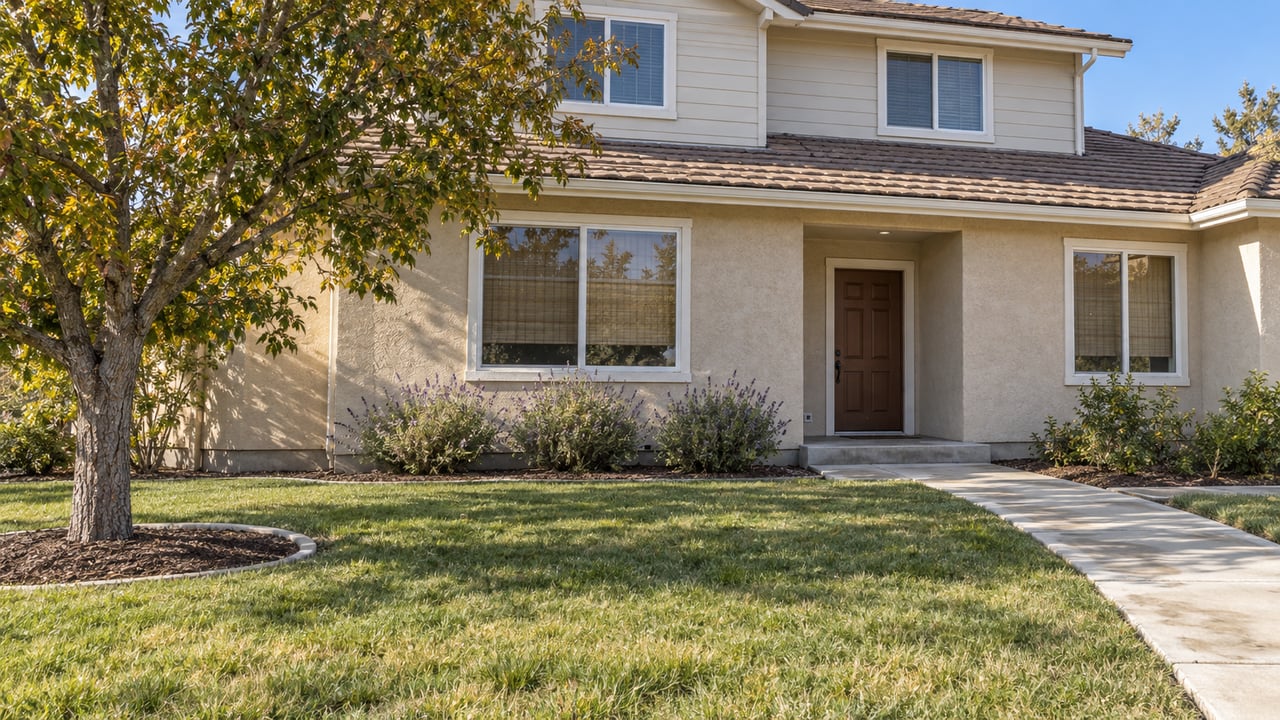
New for-sale housing in Chico is not slowing down. On the west side, Discovery Homes is actively selling Orchard Creek Estates, a community of single-story homes running from about 1,399 to 1,990 square feet, priced from the high $400,000s, tucked near Bidwell Park and Highway 32. Across town at the corner of Henshaw and Nord, a 68-home subdivision called Autumn Leaf Estates is under construction on land that used to sit inside Chico's Bell Muir Special Planning Area, a zone the city carved out back in 2011 for a community-garden-focused master plan that never fully materialized. The city council dissolved that old special planning designation to approve the subdivision, and homes there now range from roughly 1,718 to 2,676 square feet on lots sized for a pool. D.R. Horton has its own active community, Amber Lynn Estates, adding to the same for-sale pipeline.
Prices for these projects line up with what the broader Chico market is doing. Over the three months ending in May 2026, Chico's median sale price ran about $467,000, down 3.7 percent from the same period a year earlier, with homes selling in an average of 32 days. That is a market with real movement in it. Sales volume was actually up, with 225 homes sold in May 2026 compared with 205 the year before.
None of that reads like a city where builders are pulling back. If anything, entry-level subdivisions like Orchard Creek and Autumn Leaf are exactly the kind of product buyers have been waiting for.
The Apartment Side Tells a Different Story
Look at new apartment construction and the picture flips. A spring 2026 market report on Chico multifamily property found only six market-rate apartment units under construction across the entire market, even though the same report tracked more than $52 million in multifamily sales volume over the prior twelve months, most of it from private investors rather than institutions. Vacancy across existing apartment stock sits around 4.8 percent, and the average asking rent is about $1,423 a month, up 1.9 percent over the past year, ahead of the 0.5 percent national average.
Investors clearly still want a piece of Chico's rental market. They are buying existing buildings. They are just not funding new ones.
Money is flowing into Chico apartments. It is just flowing toward buildings that already exist, not toward ones that still need to be built.
Why the Numbers Don't Match
The disconnect comes down to what each side of the market has to clear financially. A builder pricing a new subdivision home can set an asking price that reflects today's land and construction costs, and a buyer can stretch a mortgage to meet it, especially with a rate buydown or seller credit built into the deal, which several of these new communities are already offering. A landlord building a new apartment complex does not have that flexibility. The rent has to cover the cost of construction over time, and at $1,423 a month average asking rent, that math does not clear for a new building the way it does for a decades-old one bought at a lower basis.
The same spring 2026 report found that Chico's top-tier four and five star apartment buildings are running a 7.0 percent vacancy rate, noticeably higher than vacancy in more affordable properties. That is the opposite of what you would expect if renter demand were strongest at the top. It is strongest at the more affordable end, which is also the segment least exposed to swings in California State University, Chico enrollment. Enrollment at Chico State has pulled back since the pandemic, and that decline shows up hardest in demand for higher-end, student-oriented apartments. Workforce-serving, more affordable rental housing draws from a broader renter base and has held up better.
Here is the split in one place:
| New for-sale subdivisions | New market-rate apartments | |
|---|---|---|
| Units currently under construction | 68 homes at Autumn Leaf Estates alone, plus Orchard Creek and Amber Lynn Estates | 6 units, market-wide |
| Entry price point | High $400,000s and up | $1,423 average asking rent |
| Investor activity, trailing 12 months | Active buyer pool for finished homes | $52 million in sales of existing buildings |
| Where demand is strongest | Entry-level, single-story floor plans | Affordable and workforce units, not luxury |
What This Means If You're Weighing Rent vs Buy in Chico
If your plan has been to rent for a year in Chico while you save or wait out rates, then buy, it is worth knowing that the rental side of that plan is not getting easier. Vacancy is tight, rents are climbing faster than the national pace, and almost nothing new is being added to relieve pressure at the affordable end where demand is actually concentrated. Meanwhile the for-sale side, particularly at the entry-level subdivisions going up right now, is where new supply is actually landing. That does not mean buying beats renting for every household. It means the two paths are not aging at the same rate, and a plan built around cheap, flexible renting while you wait may cost more than expected the longer it runs.
What This Means If You're Comparing Chico to the Rest of Butte County
Chico is not the only option in the county, and the price gap to nearby towns is real enough to change the math for a buyer or investor:
- Chico: median sale price around $467,000 as of May 2026
- Oroville: median list price of $359,000 in September 2026, down slightly from both the prior month and the prior year
- Gridley: typical home values near $348,000 as of this summer
- Durham: typical home values near $593,000, among the higher-priced small towns in the county
- Butte County overall: median sale price of $382,000 in March 2026, down 7.6 percent year over year, with homes taking an average of 41 days to sell
For an investor eyeing rental property, a lower entry price in Oroville or Gridley changes the yield math in a way Chico's tighter rental economics cannot. For a buyer priced out of Chico's new subdivisions, those same towns offer a lower barrier to ownership, with the tradeoff of a longer commute into Chico for work or school.
The subdivisions going up on Henshaw and Nord are real, and so is the wait list for a decent apartment two miles away. Both are symptoms of the same underlying math, and understanding which side of that math you are on changes how you should plan the next twelve months, whether that means buying sooner than you planned, renting somewhere other than Chico proper, or looking at a Butte County town where the numbers work differently.
If you are trying to figure out where you actually land in this market, Jennifer Giffin has spent more than fourteen years walking Northern California buyers, sellers, and investors through exactly this kind of decision. Let's Connect and talk through what these numbers mean for your specific situation.