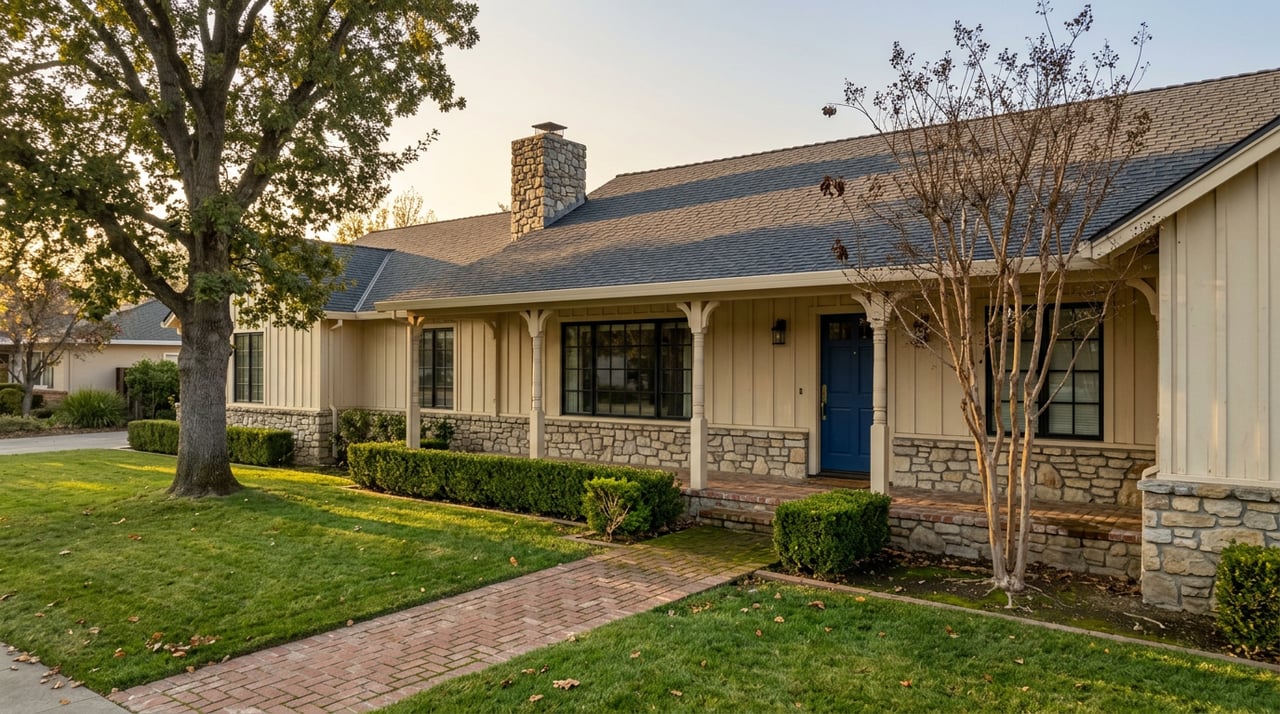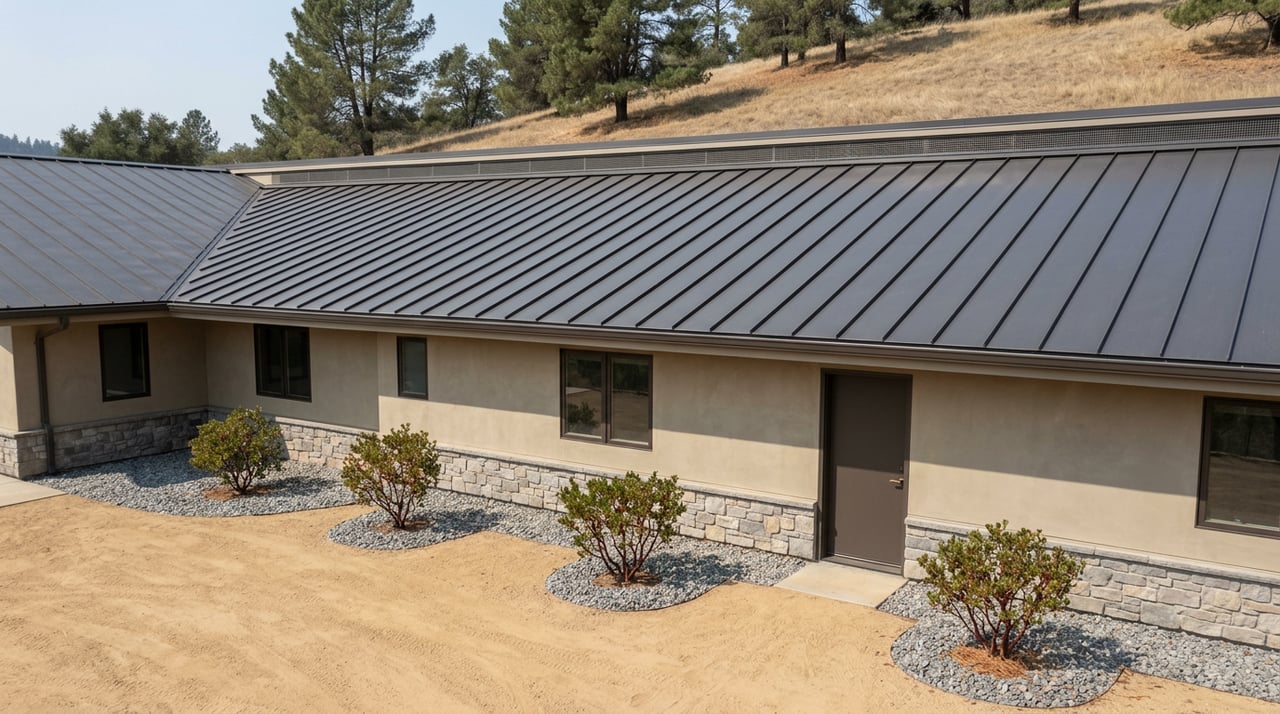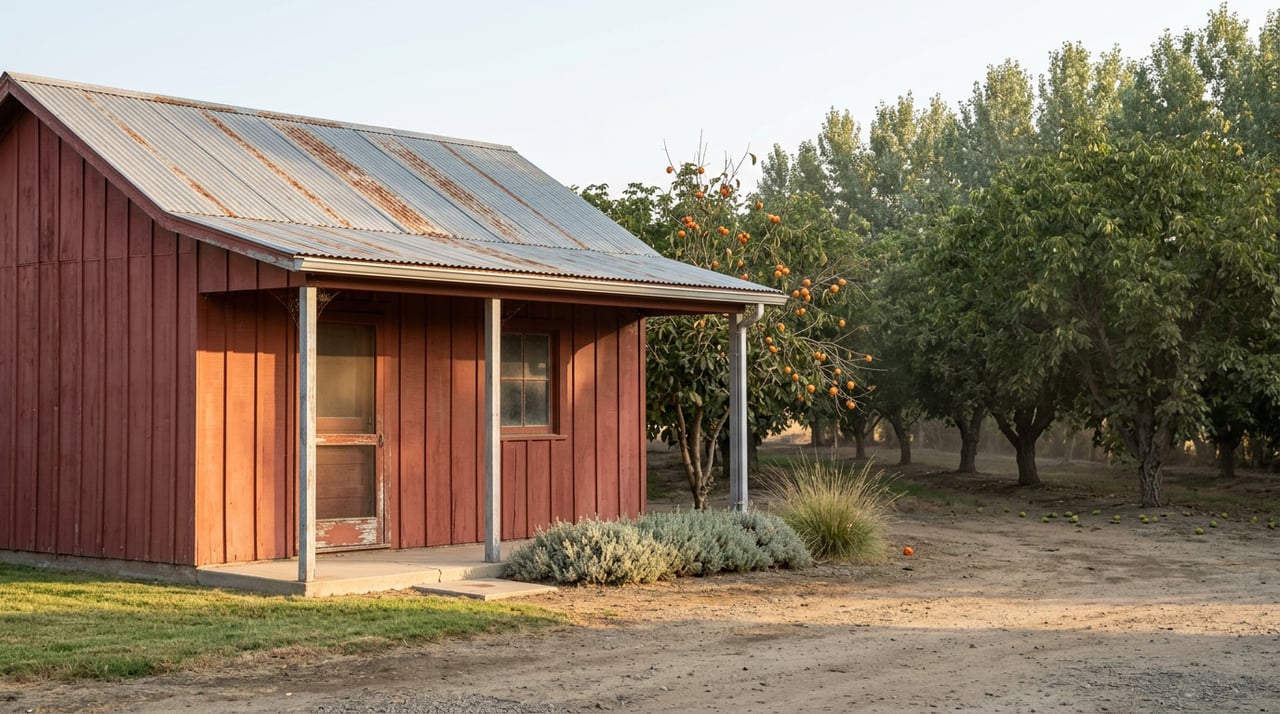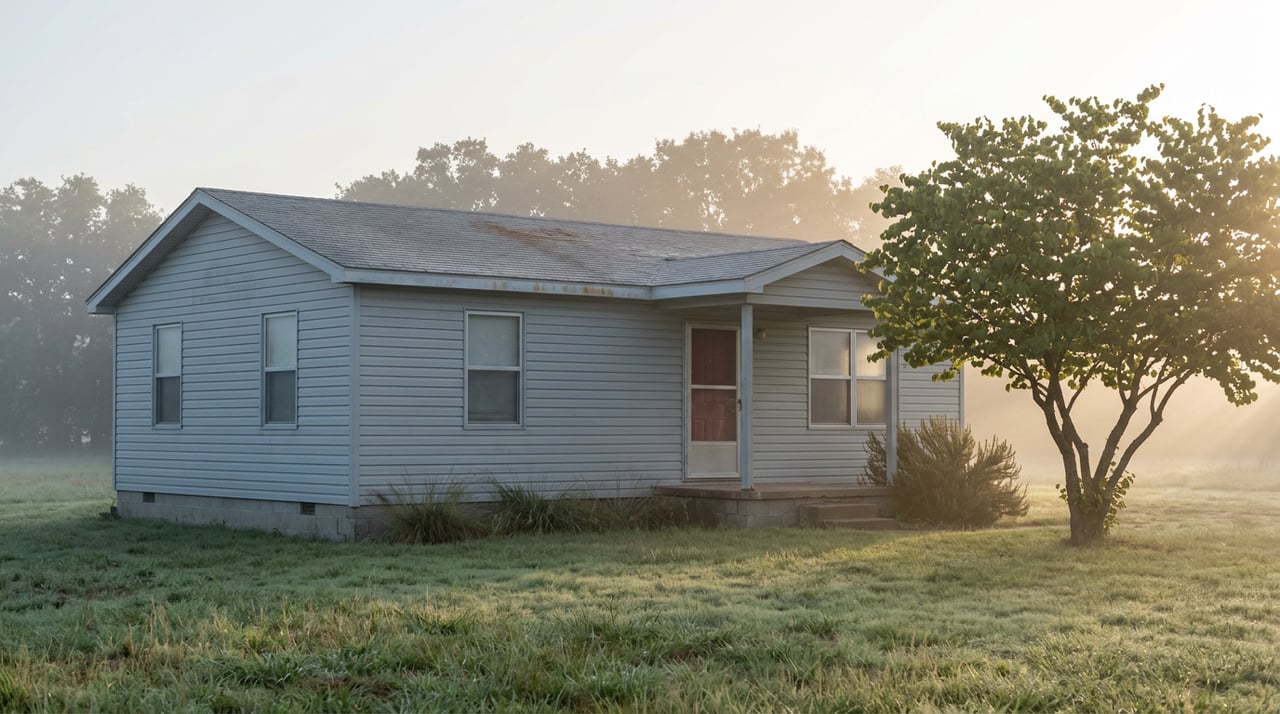
Two manufactured homes can sit within a mile of each other outside Marysville, same square footage, same age, same asking price, and end up in front of two very different lenders. One buyer signs a 30-year mortgage under 7 percent. The other is quoted a 20-year loan north of 10 percent, with a bigger down payment required just to get the conversation started.
The house didn't change. A piece of paper did.
Yuba County has more manufactured homes in its market than most Northern California buyers expect, tucked into parks, sitting on family acreage near Bullards Bar Reservoir, or parked on multi-acre lots on the edge of the Tahoe National Forest. What most people don't realize until they're already in escrow is that the same home can be titled two completely different ways under California law, and that title decides which loans exist for it at all.
The Paper Behind the Rate
By default, the California Department of Housing and Community Development treats a manufactured home the way the DMV treats a car. It issues a title and registration, the home is classified as personal property, and it stays that way unless someone does the paperwork to change it.
That paperwork exists under Health and Safety Code Section 18551. Once a manufactured home is permanently affixed to a foundation system that meets HCD standards, and the required documents are recorded with the county, the home stops being personal property and becomes real property, taxed the same way a site-built house is taxed. The California State Board of Equalization is direct about what triggers this: a manufactured home on a permanent foundation approved under Section 18551 moves onto the local property tax roll, and once it does, there's no going back to the old vehicle license fee system.
Yuba County's own assessor's office states the local version of this plainly. Manufactured homes purchased after June 30, 1980, and any home on a permanent foundation regardless of age, are subject to property tax the same way a conventional house is. The reverse is also true. A home that was never converted, no matter how old or how nicely it sits on its lot, is still personal property in the eyes of a lender.
Two Loans, One House
The classification decides which loan products even apply. A home titled as real property qualifies for a conventional mortgage, FHA, or VA financing. A home still titled with HCD as personal property is generally limited to a chattel loan, sometimes called a home-only loan.
| Real-property mortgage | Chattel (personal-property) loan | |
|---|---|---|
| Typical 2026 rate | Roughly 6% to 7.5% | Roughly 6% to 13% |
| Typical term | 30 years | 15 to 25 years |
| Land requirement | Must own the land, home permanently affixed | Can sit on leased land or a park space |
| Programs available | Conventional, FHA, VA | FHA Title I, private specialty lenders |
| Lender's collateral | Home and land together | Home only |
| What happens on default | Formal court foreclosure | Repossession under personal property law |
The spread between the two isn't a rounding error. One 2026 industry analysis put the average gap closer to 2.3 percentage points, while a Federal Reserve figure cited in mortgage industry reporting put the average chattel rate at 8.69 percent against 6.81 percent for a comparable real-property manufactured home loan. Either way, a buyer shopping by home price alone, without checking title status first, is shopping blind on the number that will actually show up on the closing disclosure.
What the Spread Costs Every Month
The math isn't abstract. One 2026 lender's side-by-side comparison on a $78,900 single-section home lays it out clearly: financed as a chattel loan at 8.5 percent over 20 years, the payment runs about $652 a month. Financed as a mortgage at 6.5 percent over 30 years, secured by land the buyer owns, it drops to about $474. That's a $178 gap every single month, for as long as the loan runs.
Scale it up and the same pattern holds. On an $80,000 chattel loan at the Federal Reserve's tracked average of 8.69 percent over 20 years, the payment lands near $705 a month, with roughly $89,200 paid in interest over the life of the loan. That is money that never touches the house, the land, or the buyer's equity. It's the price of the paperwork that was never filed.
There's a data point behind why so many buyers end up here without meaning to. The Consumer Financial Protection Bureau has found that roughly 42 percent of loans used to buy manufactured homes nationally are chattel loans, and that roughly 68 percent of manufactured housing purchase loans qualify as higher-priced mortgage loans, meaning their rate runs above what a well-qualified borrower on a standard loan would pay. Most of those loans aren't chattel because the buyer chose speed over savings. They're chattel because the home was never converted, and by the time anyone checked, the offer was already written.
The Conversion Nobody Budgets For
Converting a manufactured home from personal to real property is doable, but it isn't automatic and it isn't free. Under Section 18551, the process requires a building permit to install the home on an approved permanent foundation, proof that the same person owns both the home and the land underneath it, and written consent from any lienholder if the home isn't free and clear. A licensed engineer or architect signs off on the foundation plans, and the local building department prepares Form HCD 433A, which is what actually converts the county assessor's classification from personal property to real property once it's recorded.
That recording step matters legally, not just administratively. Once filed, the county recorder indexes the document to the property owner and it becomes constructive notice to anyone who deals with that land afterward, buyer, lender, or title company.
Cost estimates vary depending on what's already in place. Guides covering the same HCD process put the engineering and filing paperwork alone at roughly $1,000 to $3,000. When the conversion also involves building an actual permanent foundation from scratch, rather than certifying one that already exists, other 2026 lending guides put the full project closer to $10,000 to $30,000. The process itself typically takes 60 to 120 days from application to recorded conversion, which matters if a buyer is counting on real-property financing to close on a specific timeline.
Where This Actually Lands in Yuba County
The title question isn't evenly distributed across Yuba County's manufactured home inventory, and knowing where you're looking changes what's possible.
Homes inside land-lease communities, the kind of park settings found around Olivehurst and Marysville, can't be converted to real property at all as long as the resident doesn't own the ground underneath. Section 18551 requires common ownership of the home and land before conversion is even an option. A buyer looking at a home in a park should plan around chattel financing from the start, regardless of credit score or down payment size, because the legal path to a mortgage simply isn't available on leased dirt.
Homes on owned acreage, the kind scattered through Dobbins, Forbestown, Bangor, and the foothill country near Bullards Bar Reservoir, are a different story, but not automatically a better one. Owning the land makes conversion possible. It doesn't mean conversion already happened. Some of these homes have sat on permanent foundations for decades without anyone ever filing the paperwork that actually moves them onto the property tax roll as real estate. The only way to know for certain is to check the assessor's classification and ask for the recorded 433A directly, rather than assuming that a home that looks permanently installed is titled that way on paper.
What to Confirm Before You Write the Offer
- Ask the seller, in writing, whether the home is titled with HCD as personal property or recorded with the Yuba County Recorder as real property.
- If the home sits on leased land or a park space, plan your financing around chattel loan terms from the outset, since conversion isn't legally possible without land ownership.
- Check the manufacture date on the HUD data plate. FHA financing requires the home to have been built after June 15, 1976, and never moved from its original installation site, separate from foundation or title status.
- If the seller claims the home was converted, ask to see the recorded 433A or 433B rather than taking the foundation's appearance as proof.
- If you're buying with the intent to convert later, budget for both scenarios: the lower-end paperwork and engineering costs if a foundation already qualifies, and the higher-end full construction costs if it doesn't.
FAQ
Can I convert a chattel loan into a mortgage after I close? Yes, if you own the land the home sits on and complete the Section 18551 conversion. Expect a 60 to 120 day process and costs that can range from roughly $1,000 for paperwork and engineering alone up to $10,000 or more if new foundation work is required. Once the conversion is recorded, the home cannot be shifted back to personal property tax treatment.
Does the home's age matter separately from its title status? Yes. Even a manufactured home that's been converted to real property and sits on a solid foundation still has to meet FHA's build-date requirement, post-June 15, 1976 construction that has never been relocated, to qualify for that specific program. Title status and build date are two separate checks, and a home can pass one and fail the other.
Manufactured home financing in Yuba County rewards buyers and sellers who ask the title question early, not after a lender has already run the numbers. If you're weighing a purchase or getting ready to list a manufactured home on owned land or in a park setting, Jennifer Giffin can help you sort out what's actually on record before you're locked into an offer. Let's Connect.