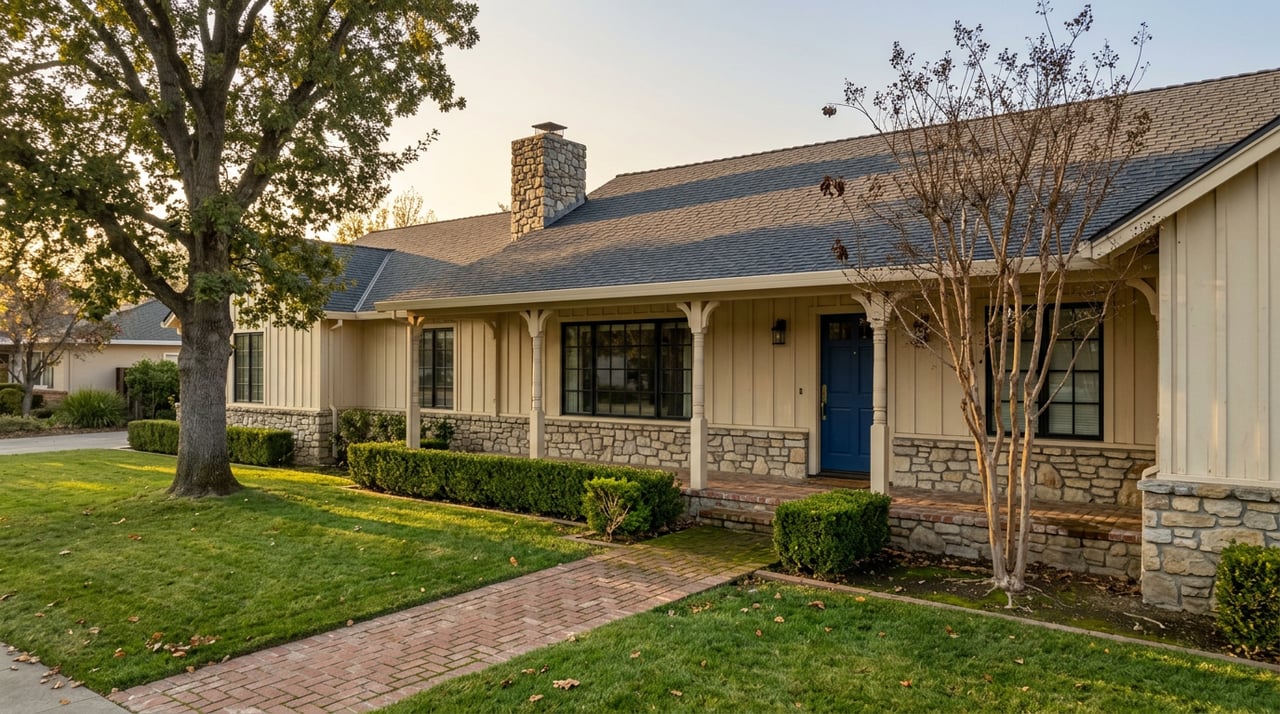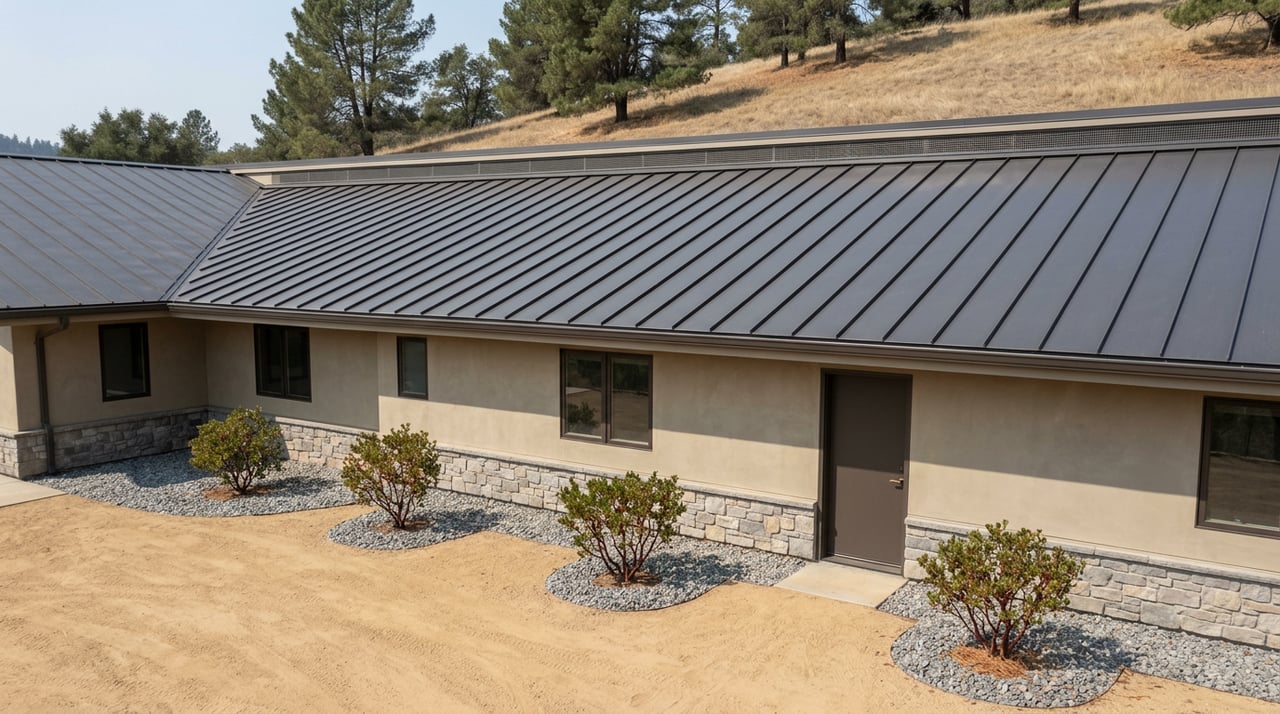
Picture two Butte County buyers a few weeks into escrow. One is buying a newly built home in Paradise. The other is buying an older home in Chico, closer to town, a few miles from open grassland but inside city limits. On paper the Chico property looks like the safer bet. In practice, the Paradise buyer gets a private homeowners policy with a name-brand carrier. The Chico buyer ends up on the California FAIR Plan, fire coverage only, and has to layer a second policy on top just to satisfy the lender. Same county, same season, two completely different insurance conversations.
That gap is not about which town sounds riskier. It is about a building ordinance most buyers never think to ask about until their loan officer asks for proof of coverage and the quote that comes back does not look like what they expected.
What's actually deciding the quote
For years the shorthand in Northern California real estate was simple: foothills bad, valley good, closer to town safer than farther out. Wildfire risk maps still matter, and they still shape where insurers are willing to write policies at all. But inside Butte County right now, the sharper dividing line runs through construction year and documented hardening, not through city limits.
Here is the historical version of that pattern. University of California researchers studying the aftermath of the 2018 Camp Fire found that nearly 40 percent of homes built after 1997 survived the fire, compared with 11 percent of homes built before that year. Same fire, same wind event, same embers landing on the same ridge. The difference was what the structure was built to withstand. That finding is now the foundation for a state-level push, backed by the California Department of Insurance and the National Association of Insurance Commissioners, to model exactly how much rebuilding to a modern wildfire standard can change a home's insurability.
Paradise did not wait for that study to make it official. The town acted on the same logic years earlier, and it changed who will insure a home there.
The ordinance that changed the math
In July 2022, the Town of Paradise updated its building ordinance to require that every new home meet the Wildfire Prepared Home standard developed by the Insurance Institute for Business & Home Safety. The requirements are specific: a Class A roof, ember-resistant vents with at least six inches of solid vertical clearance at the base, and a noncombustible five-foot buffer immediately around the structure known as Zone 0. None of it is decorative. IBHS built the standard around forensic research on how homes actually ignite in a wildfire, which is almost never a wall of flame and almost always a wind-driven ember finding a gap.
IBHS president and CEO Roy Wright described Paradise as "thoughtful in its approach" to rebuilding, and said the goal was making the town "more insurable." That second word is the part that matters for a buyer today. Insurability was the point, not just survivability.
What that ordinance bought the town
In January 2025, Mercury Insurance announced it would begin writing new homeowners policies in Paradise, becoming the first major carrier to return to the town since the Camp Fire. Mercury has said it planned to insure more than 200 homes there as part of the move, tied to the same state reforms under Insurance Commissioner Ricardo Lara that require carriers to expand coverage in high-risk areas in exchange for using updated wildfire risk models in their rate filings.
That is not a small thing for a town that spent years as a byword for uninsurable. According to the Rebuild Paradise Foundation, some residents who moved from FAIR Plan coverage to a private policy after their home met the hardening standard saw their insurance costs drop by as much as 800 percent. A separate CDI-NAIC analysis found that rebuilding to the Wildfire Prepared Home Base standard reduces a home's projected average annual wildfire loss by about 31 percent, with the enhanced Wildfire Prepared Home Plus tier reaching 35 percent. Lower projected loss is the exact number insurers use to decide whether to write a policy at all, and at what price.
Contrast that with the rest of the county. Older housing stock in unincorporated Concow, Magalia, and Berry Creek, along with parts of the Chico foothills near Bidwell Park and the Highway 32 corridor, has been dealing with non-renewals since 2018 and largely remains dependent on the FAIR Plan. Oroville and Gridley sit in a similar spot. None of that is because those communities are closer to wildland than a new Paradise build. In many cases they are not. It is because the homes themselves were not built, or retrofitted, to the same standard.
| New Paradise build to Wildfire Prepared Home standard | Older home in Chico foothills or unincorporated Butte County | |
|---|---|---|
| Typical primary coverage | Private carrier (Mercury and others expanding) | California FAIR Plan, fire-only |
| Companion coverage needed | Often none, or standard endorsements | Usually a separate Difference in Conditions policy for liability, theft, water damage |
| Discount pathway | Documented IBHS designation, carrier-specific mitigation credits | Limited; FAIR Plan itself offers no mitigation discount |
| Rate trajectory into late 2026 | Tied to private market filings, more competitive | Facing the FAIR Plan's approved statewide increase |
The clock most buyers don't know about
If you are shopping in Butte County right now, there is a date worth writing down. The California Department of Insurance approved a 29.1 percent average rate increase for FAIR Plan policyholders, effective October 15, 2026. That is a statewide average. Properties with heavier wildfire exposure, which includes a meaningful share of Butte County's older housing stock outside the newest Paradise construction, are likely to land at or above that average rather than below it.
For a buyer under contract on a FAIR Plan-dependent property before that date, the quote you get today may not be the number you are actually paying by the time your first renewal comes around. That is worth factoring into any offer on a home that is currently insured through the FAIR Plan rather than a private carrier, because the monthly cost of ownership is not fixed the way the mortgage payment is.
There is also a more immediate transaction issue. A FAIR Plan policy alone will usually satisfy a lender's basic hazard insurance requirement at closing, but because it only covers fire, smoke, and internal explosion, most lenders want to see a Difference in Conditions policy layered on top before they will fund. Arranging that DIC wrap takes time and a second underwriting review. Buyers who wait until the final week of escrow to shop for it are the ones most likely to see their closing date slip.
What to actually check before you write an offer
A few questions do more work than asking which town sounds safer:
- What year was the home built or last substantially rebuilt, and does it fall before or after the property's local wildfire building code updates.
- Has the home received a Wildfire Prepared Home designation, and if so, is the seller current on the annual landscape review required to keep it valid. The designation runs on a three-year cycle and depends on ongoing maintenance, not just the original construction.
- Is the current policy a standard admitted carrier, a surplus lines policy, or the FAIR Plan. Each one changes what your lender will require and how much total premium you should budget for.
- If the FAIR Plan is involved, has a Difference in Conditions quote already been requested. Getting that number early avoids a scramble later in escrow.
- Are there receipts or photos documenting hardening work like vent replacement, roof upgrades, or defensible space clearing, even if the home never went through formal IBHS certification. Several carriers, including Mercury, offer documented mitigation credits without requiring the full designation.
None of these questions require guessing at future fire behavior. They require reading the paperwork that already exists on the property.
The takeaway for Butte County buyers
The old mental map of Butte County real estate sorted towns into safe and risky. The insurance market has moved past that. A single ordinance in one town changed which carriers will write a policy there at all, while comparable homes a few miles away in a "safer" city are riding out a FAIR Plan increase that lands this October. The question worth asking about any Butte County property is not which side of the county line it sits on. It is what the roof, the vents, and the five feet around the foundation are actually built to withstand.
FAQ
Does a Wildfire Prepared Home designation carry over automatically to a new buyer? The designation is tied to the property and verified by inspection, but it also requires ongoing upkeep, including annual landscape reviews to keep the three-year certification valid. Ask the seller for current documentation rather than assuming a past certificate is still active.
Is the IBHS Zone 0 requirement the same as California's general defensible space rules? No. Zone 0 is the specific noncombustible five-foot buffer built into the Wildfire Prepared Home standard. It works alongside broader defensible space requirements rather than replacing them, so it is worth confirming a home's documentation addresses both.
What if the home I want doesn't have any hardening documentation at all? That does not rule the property out. It means budgeting time in escrow to get quotes from carriers actively expanding in Butte County, and being realistic that a FAIR Plan plus DIC combination may be the starting point until any future hardening work is documented.
Insurance is only one piece of what makes a Butte County property a sound purchase, but it is the piece that can quietly stall a closing if nobody checks it early. If you are weighing a home in Paradise, Chico, Oroville, or anywhere in between, Jennifer Giffin can help you read what the paperwork actually says before you write the offer. Let's Connect.