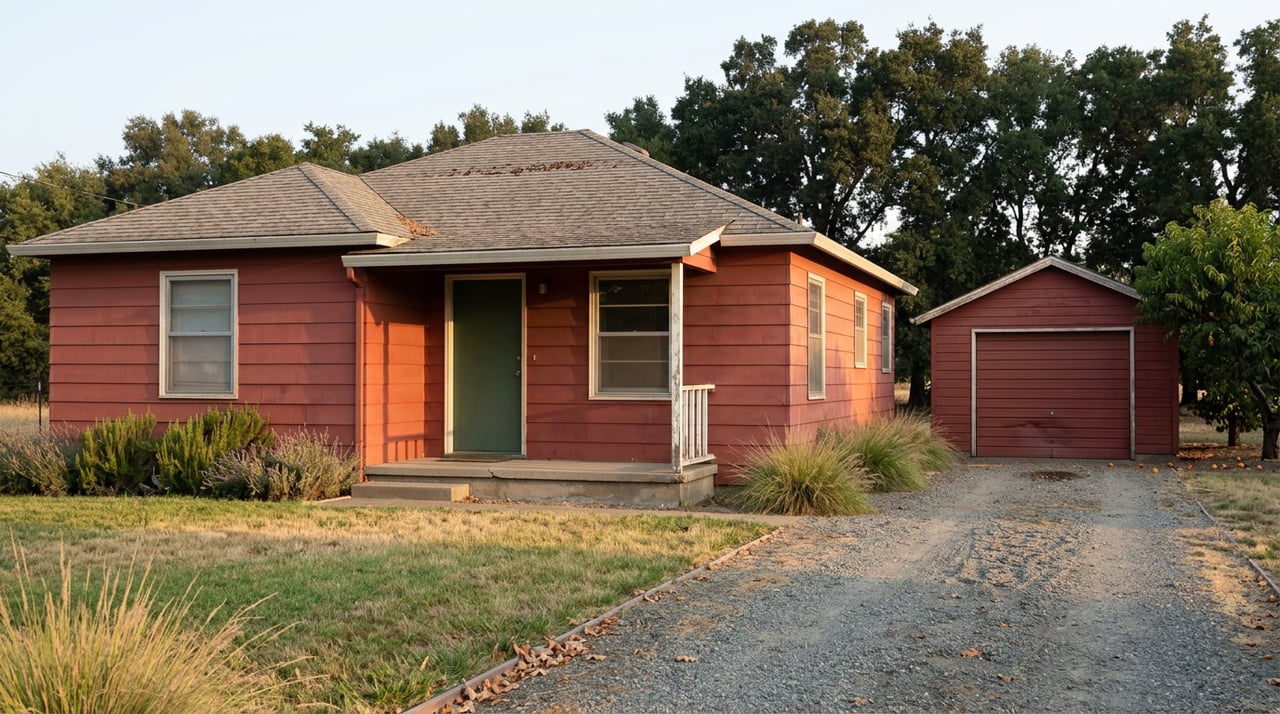
Ask around Yuba County and you'll hear the same shorthand for rural financing here: no money down, thank the USDA, done. It's not wrong. It's also not the whole story, and the part left out is the part that decides whether your offer on a place outside Marysville or Wheatland actually closes.
Nearly the entire county falls inside the USDA's rural eligibility boundary, and the federal definition of "rural" is broader than most buyers assume: any area outside a city or urbanized cluster of more than 50,000 residents qualifies. Nothing in Yuba County approaches that size on its own, which is why the zero-down pitch reaches from the Gold Rush river town of Marysville, home to the Bok Kai Temple, out through Olivehurst and Wheatland to Dobbins, Camptonville, Brownsville, and Bangor. That's the pitch everyone repeats. What gets skipped is that "USDA loan" is actually two different programs wearing one name, and only one of them still reaches what a typical Yuba County home costs right now.
What "Eligible" Actually Covers on the Map
The eligibility line itself is generous. Roughly 97 percent of Yuba County's land area sits inside the USDA's rural boundary, with only about 3 percent excluded, concentrated in the handful of pockets dense enough to trip the population threshold. That leaves nearly all of the county's housing stock, from small ranches near Wheatland to acreage parcels toward Challenge and Strawberry Valley, eligible in principle for financing with no down payment through USDA Rural Development.
Loan-level data on past USDA-backed originations in the county backs up how the program has actually been used here. The average loan balance runs around $188,700, tied to homes appraised near $187,700 and averaging about 1,778 square feet, with the large majority going to first-time buyers. Those are modest numbers by design. The program was built around modest homes, and for years that's exactly what it financed here.
One Name, Two Programs
The confusion starts because USDA Rural Development actually runs two separate mortgage products under the same rural umbrella, and they behave very differently once you're pricing a specific house.
| Guaranteed Loan (Section 502) | Direct Loan | |
|---|---|---|
| Down payment | 0% | 0% |
| Who underwrites it | A private lender, USDA guarantees it | USDA itself |
| Loan ceiling in Yuba County | No flat dollar cap, governed by income and debt ratio | $324,700 maximum, effective February 10, 2026 |
| Typical buyer | Moderate-income households who still clear conventional debt-to-income math | Lower-income households who need the deepest subsidy |
The Guaranteed loan, the one most lenders mean when they casually say "USDA loan," has no set price ceiling. It scales to what your income and debt ratio can support. The Direct loan, administered straight through USDA Rural Development rather than a bank, does have a hard number attached to it in Yuba County: $324,700, per the current Rural Development area loan limit schedule, effective February 10, 2026.
That distinction rarely comes up until a buyer is already attached to a specific address.
The Ceiling Sits Below Today's Median
Here's where the math stops being theoretical. Yuba County's average home value stood at $421,979 as of the end of June 2026, down 2.1 percent from a year earlier. Compare that to the Direct loan's $324,700 ceiling and you're looking at close to a $97,000 gap between what a typical Direct-loan applicant can borrow and what a typical Yuba County home now costs.
That gap didn't exist when most of the county's historical USDA loans closed. An average appraised value of $187,700 fits comfortably under both the modest-home standard the program requires and the current Direct loan cap. A $421,979 home doesn't fit under the Direct cap at all, and it's brushing right up against the kind of size and value comparison an appraiser uses to judge whether a house still counts as "modest" for its area.
None of this shuts a buyer out of rural Yuba County financing altogether. It just means the zero-down promise most buyers picture, the Direct loan with its rock-bottom terms, has quietly priced itself out of the county's current median. The Guaranteed loan, with no flat ceiling, is now doing most of the work that the shorthand "USDA loan" implies. Whether that program reaches your specific offer depends on your income and debt ratio, not on the map.
What Actually Fails the Appraisal, Not the Zip Code
Being inside the 97 percent eligible zone gets a property to the starting line. It doesn't guarantee it clears the appraisal, and this is where Yuba County's agricultural character creates its own friction. A rural loan appraiser is checking for specific things that a working ranch or an old orchard parcel can easily fail even while sitting well inside eligible ground:
- The home has to read as modest compared to what's around it, generally under 2,000 square feet and priced in line with nearby comparable properties, not oversized or elaborate for the area.
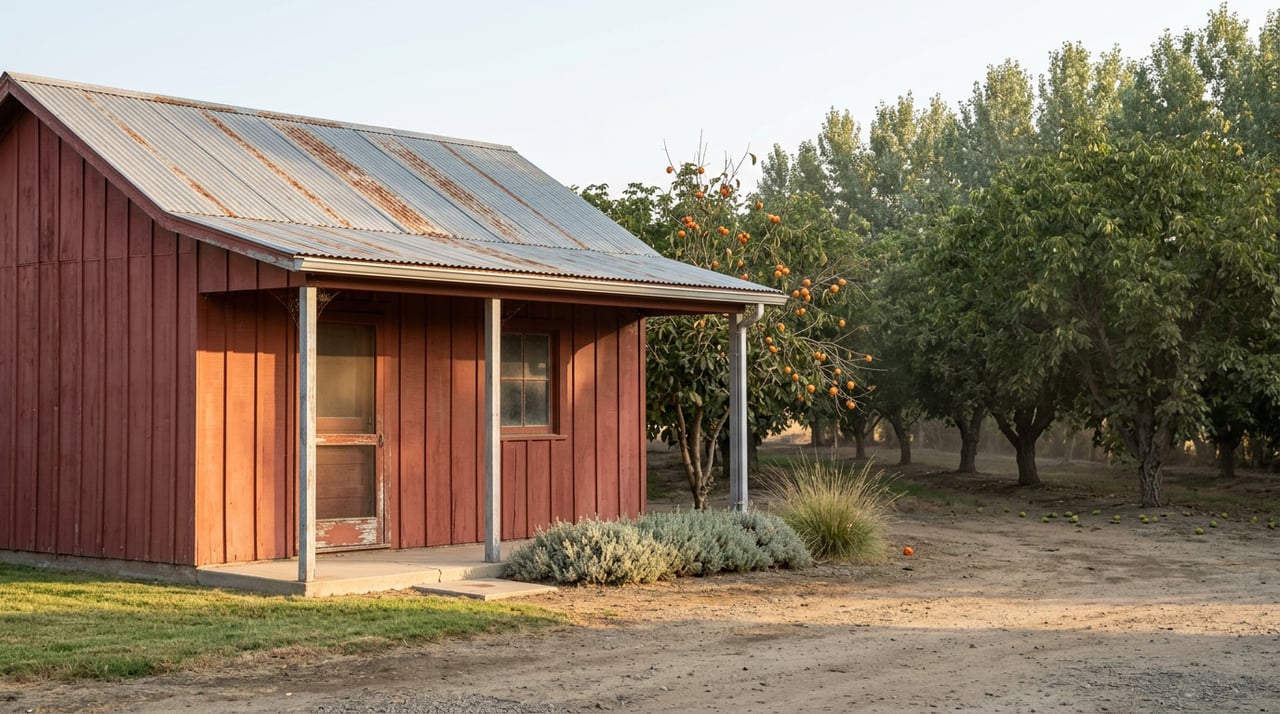
- No income-producing structures and no leased land. A parcel with a rented-out barn, a second dwelling generating rental income, or acreage under an active grazing or crop lease can disqualify the whole property, regardless of how modest the main house is.
- Water and waste systems have to be safe and functioning. Wells and septic systems are acceptable, but the well needs adequate output and pressure, and the septic system needs to show no visible signs of failure. If an appraiser spots a problem, the loan requires repair or further inspection before it moves forward.
- The lot itself needs street access and can't include obvious structural hazards, exposed wiring, or a foundation showing cracks or settlement.
In a county built on rice, peaches, and prunes, it's common for a listing to come with exactly the kind of outbuilding or ag lease that trips the income-producing-structure rule. That's worth knowing before you fall for a parcel, not after the appraisal comes back.
The Paperwork That Surfaces at the Same Time
The financing quirks tend to arrive alongside a disclosure stack that's specific to this part of the valley. Rural Yuba County properties on well and septic require disclosure of water quality history, well depth and production capacity, and septic age and maintenance records, on top of the standard state disclosure form. Sellers who owned a municipal-water home somewhere else before buying rural often don't realize how different that stack looks until their own listing agent walks them through it.
Properties near the working orchards and rice ground around Wheatland can also trigger a Right-to-Farm notice, informing buyers that normal agricultural activity, noise, dust, and equipment included, is expected nearby and isn't grounds for complaint later. And anything close to the Feather River or Yuba River flood corridor may need a flood zone certificate before a lender will finalize the loan.
The map says yes almost everywhere in Yuba County. The number that actually decides your offer is which loan program says yes to your price, and whether the parcel itself still counts as modest under that program's rules.
Buyers looking further out toward Beale Air Force Base should know the base keeps its own land use compatibility plan on file with the county, covering how surrounding parcels relate to base operations. It's public record and worth a look if you're shopping that side of the county.
A Few Questions Worth Asking Before You Write the Offer
Does having acreage disqualify a property from USDA financing? Not on its own. The program has no acreage limit for single-family homes. What disqualifies a property is income-producing use of that acreage, an active lease, or structures generating rental income separate from the main home.
If the well or septic fails during the appraisal, is the deal dead? Not automatically. A failed inspection typically triggers a required repair or a follow-up inspection rather than an outright denial. It does add time to escrow, which is exactly why ordering water and septic tests early matters.
Which loan should I even ask my lender about? Start the conversation by naming both. Ask specifically whether you're being pre-qualified for the Guaranteed program or the Direct program, since the income limits, loan ceiling, and underwriting party are all different, and the answer changes what price range you should actually be shopping in.
Rural financing in this county rewards buyers who ask the second question instead of stopping at the first answer. If you're weighing a parcel anywhere from Olivehurst out to Camptonville and want to talk through what a specific address would actually qualify for, Jennifer Giffin has spent more than fourteen years walking Northern California buyers through exactly this kind of paperwork. Let's Connect.